The question you ask at 2 a.m., not in the studio
There is a version of this fear almost no one says out loud in a consultation. It usually arrives later, alone, scrolling: do black and grey realism tattoos age well — and, underneath it, what will this actually look like in ten years? Not the day it heals. Not in the flattering studio light of an Instagram post. In a decade, on your own skin, when the newness is gone and the ink has had time to become part of you.
It is a fair thing to be afraid of. You are considering permanent work at a serious price, and every corner of the internet whispers the same warning back at you — that fine detail blurs, that grey softens into a smudge, that realism is fragile and the risk is yours to carry. I want to take that fear seriously, because it deserves a real answer instead of reassurance.
Design is one part of the answer. Skin, technique, placement and care also matter, and no artist can promise exactly how a tattoo will look in a decade. Dated healed photographs give you another useful piece of evidence.
You look at their healed work.
What fresh and healed photographs can show
A fresh photograph can show composition, placement and detail immediately after a session. It cannot show how that same piece will look after healing or several years of wear.
Ask for photographs taken at different dates, with similar lighting where possible. That makes the comparison more useful than an unlabeled before-and-after pair. A photograph cannot diagnose whether skin is healing normally.
A portfolio with both fresh and dated healed work gives you more context than either alone. Ask what each photograph represents before drawing conclusions.
Ask when the photograph was taken, not only whether you like the picture.
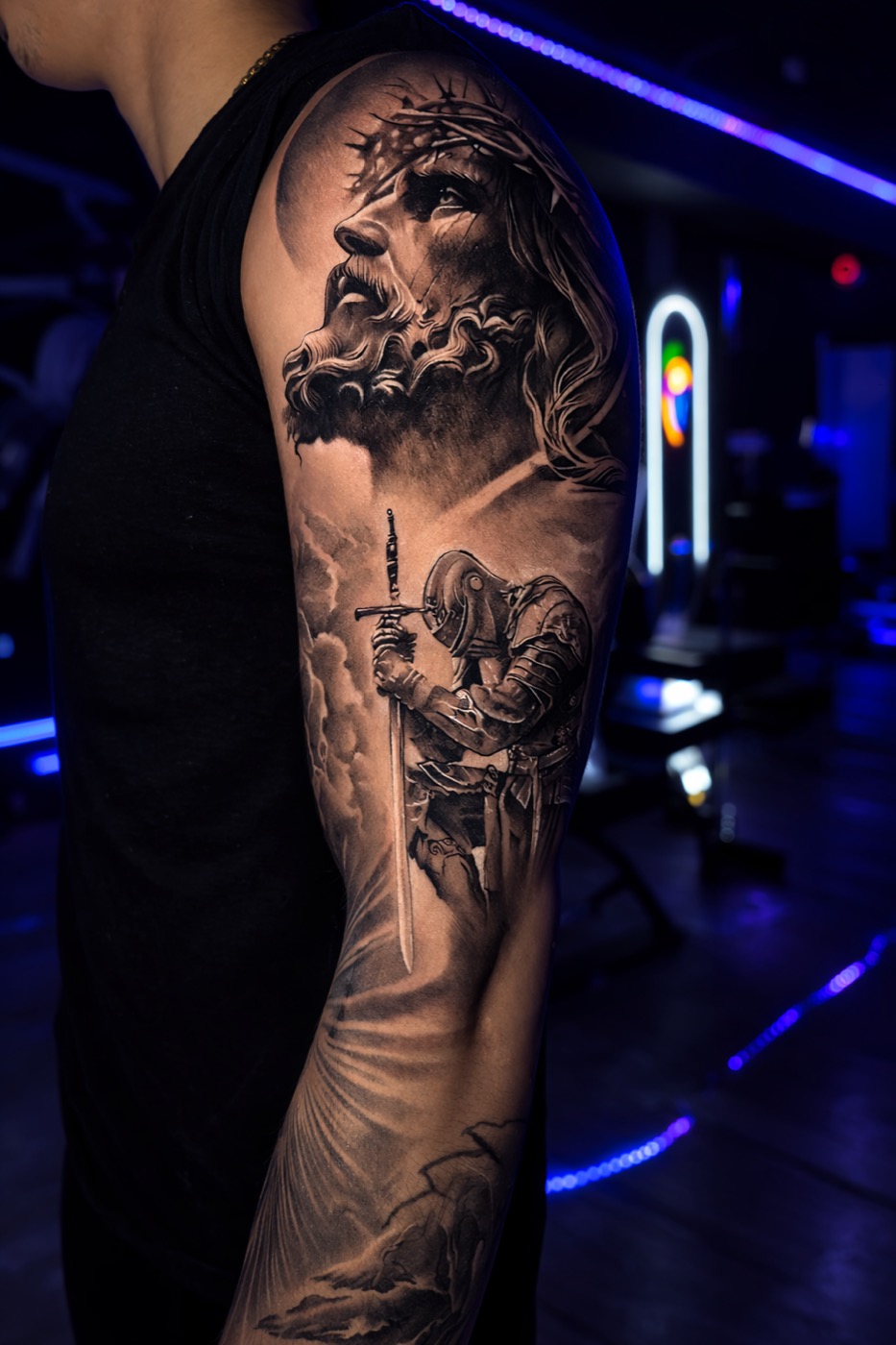
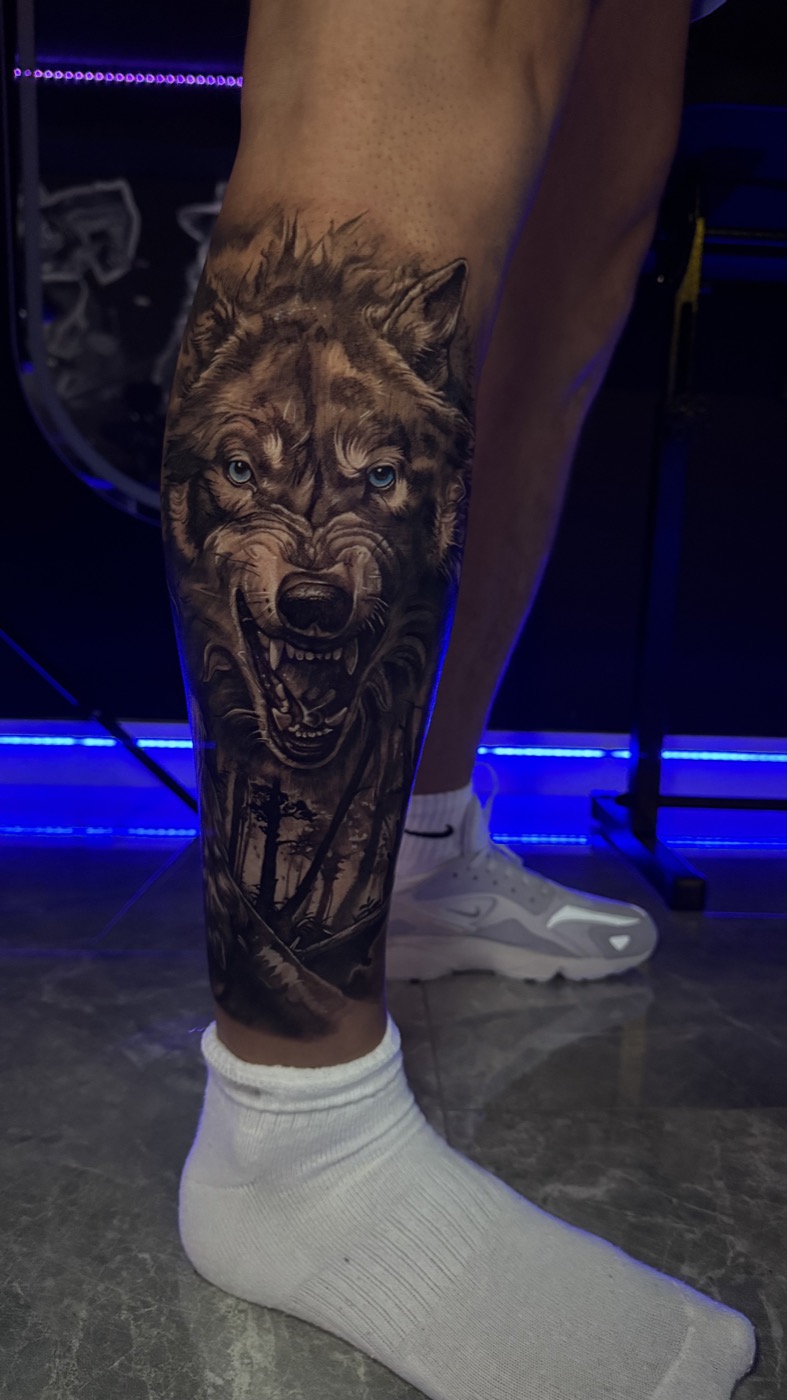
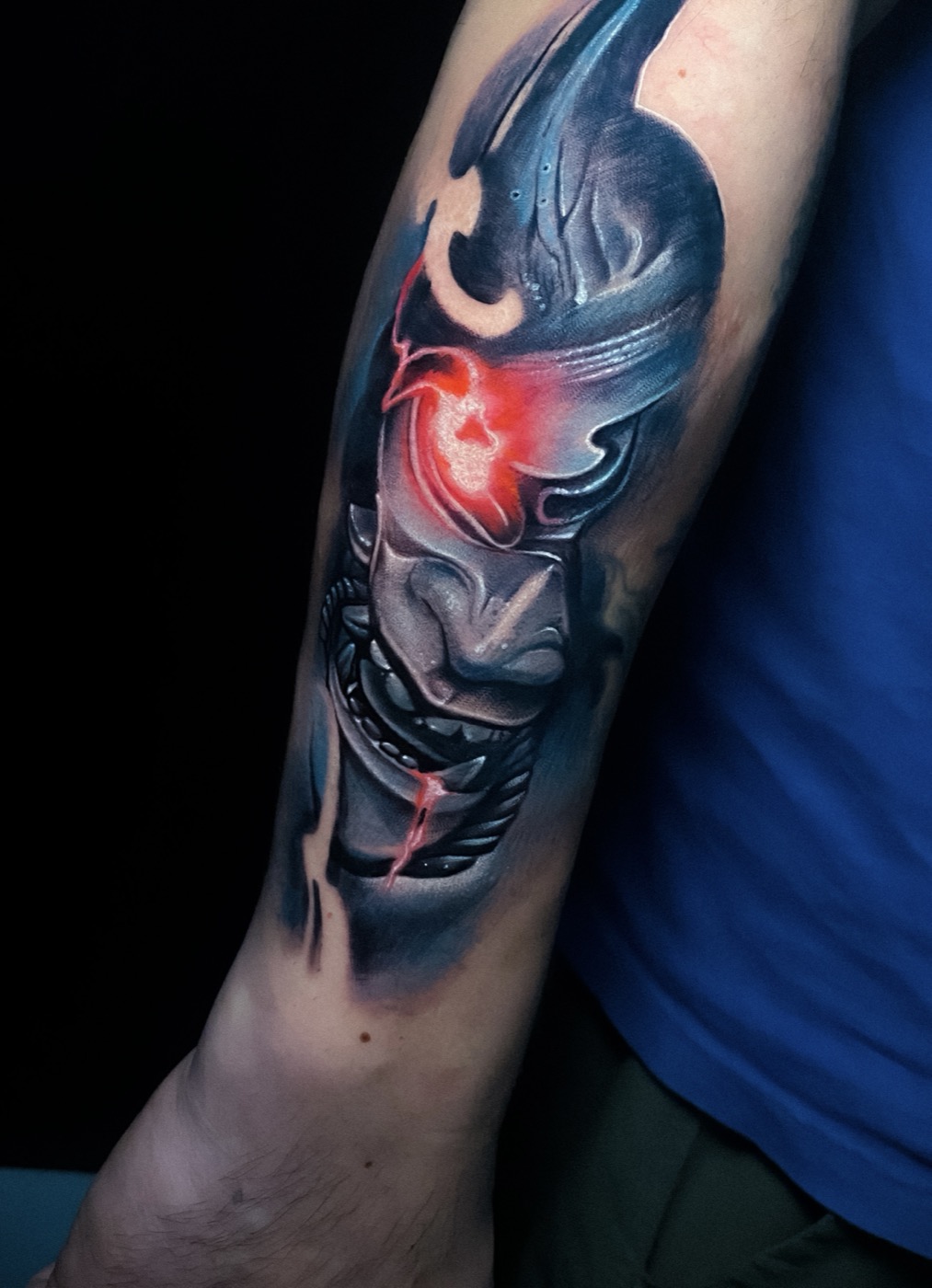
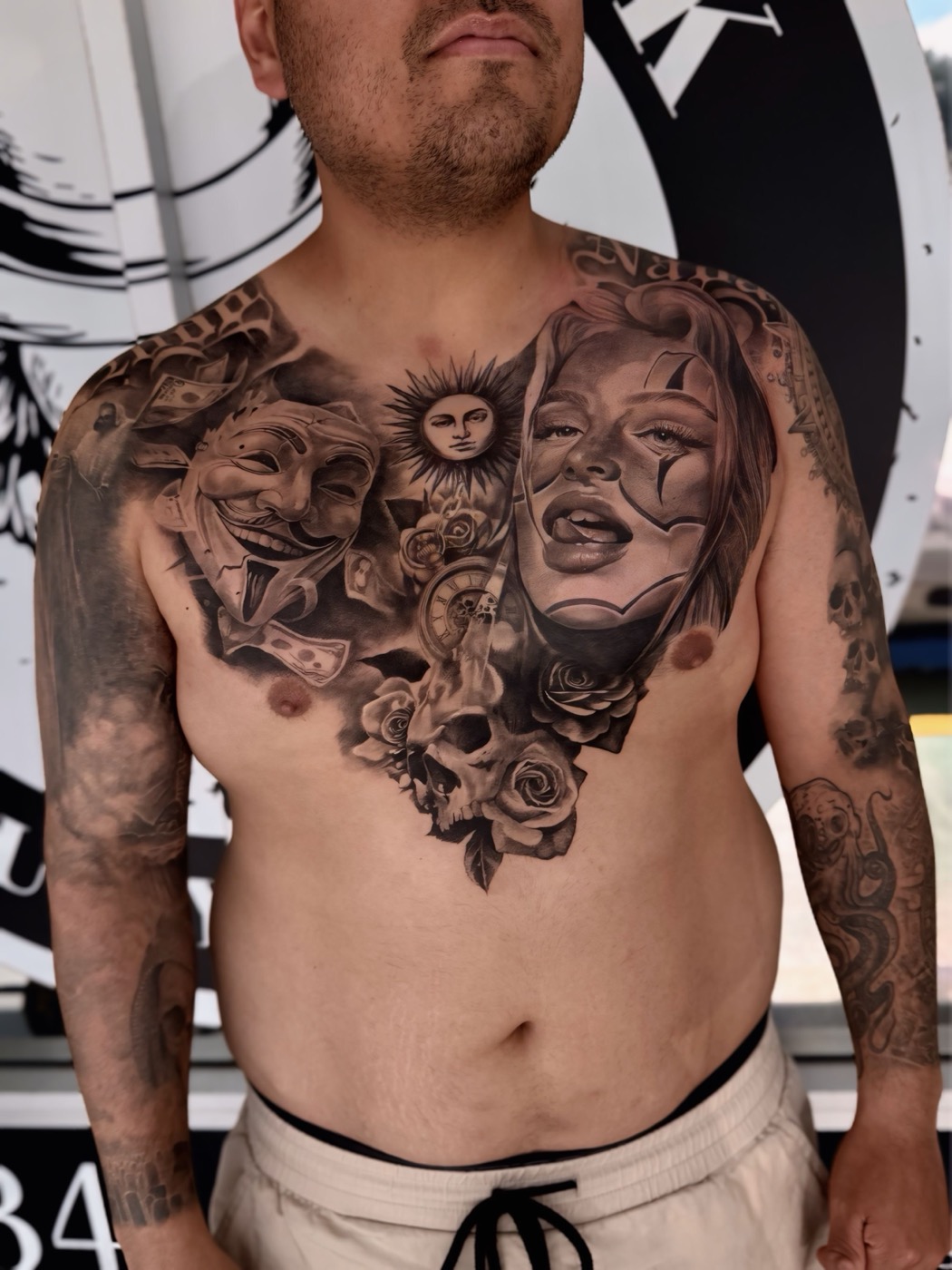
Browse my work for composition and style. The images in this article are design examples; their healing dates have not been documented here, so they should not be treated as proof of long-term results.
Comparing black and grey with color realism
Black and grey and color realism offer different visual choices. Style alone does not establish which individual tattoo will age better.
A black and grey portrait reads through tone, the relationship between light and shadow. Color realism combines that tonal structure with hue. In either style, look at whether the subject remains clear at the proposed size and placement.
Compare examples that resemble the project you want. A bold black and grey torso piece and a tiny color portrait are different design problems, so they are not a fair test of one style against the other.
Designed to last: the longevity decisions I make before the needle
These design decisions help us plan for readability. They are considerations, not a guarantee of a particular result at fifteen years:
- Contrast hierarchy. A realistic image survives because the eye can still find its structure — the darkest darks against the cleanest lights. If everything sits in the same middle grey, softening erases the whole thing. If the contrast is built to hold, the image keeps its shape long after the finest detail has mellowed.
- Dark anchors. Deliberate points of true depth that give the piece a spine. They are what the eye locks onto years later, the reason a face still reads as a face.
- Pigment density and placement. Saturation and where it sits in the skin decide how gracefully a piece settles.
- Size against detail. This is the tradeoff clients are almost never told before they book. Detail needs room. A piece asked to hold intricate texture at a size too small, in a spot the body works hard, is being set up to blur — not because the artist failed, but because the physics were ignored at the design stage.
I work digitally, on a tablet — building the reference, testing enlargement, making contrast decisions, proofing size against placement before anything becomes a stencil. The first version is never the final version. I want to see where the image strains before your skin ever does.
The first version exists to be argued with.
You can see how I think through this on the process page. The point is simple: the decisions that protect a tattoo from time are made in the design, not discovered in the healing.
How to read a healed tattoo portfolio yourself
You do not need to be an artist to judge this well. You need to ask the right questions. Bring these to anyone you're considering — including me:
- Ask for healed photos at six months or more. Not just fresh. If an artist can only show you day-one work, you are seeing the promise and not the proof.
- Look for consistency across pieces, not one hero shot. Anyone can land a single stunning tattoo. You want to see the standard held again and again.
- Check the light logic. In strong realism, light and shadow behave the way they do in the real world. Healed work that still obeys that logic was built on structure, not surface tricks.
- Watch the darks. Do the anchors still hold? A healed piece where the depth survives is a piece that was designed to.
Ask those four things and you will learn more in five minutes than a hundred fresh photos could tell you.
Why I sometimes say no — and what healthy healing looks like
I turn down pieces. Not often, and never to be difficult, but because saying yes to a design I know won't age well would be doing you a quiet disservice. If an idea needs more room than the placement allows, or the detail can't survive the size you want, I will tell you before we start — and discuss a version with more room for the important details. That is not scarcity for its own sake. It is refusing to sell you a regret.
If you notice unexpected changes in tattooed skin, do not rely on a portfolio article to judge healing. The American Academy of Dermatology explains tattoo reactions and when to seek medical help.
The strongest work is designed for the version of you that exists in ten years, not the one standing in the studio today. If that is the standard you want — the one you can actually verify in healed skin — that is the only standard I know how to work to.
When you're ready, the inquiry-first booking process at the Centennial studio is a conversation, not a commitment: you tell me the idea, I tell you honestly how to build it so it lasts. No rush. There are more of these in the journal if you'd like to keep reading first.
Further reading
For care of tattooed skin and sun protection, see the American Academy of Dermatology’s guidance.
Frequently asked questions
Do black and grey tattoos fade faster than color tattoos?
There is no reliable ranking from style alone. Compare dated healed examples in both styles, and discuss contrast, scale, placement and care with your artist. Neither style comes with a guaranteed lifespan.
How long does a realism tattoo take to fully heal?
Healing varies between people and tattoos. Follow your aftercare instructions and ask a healthcare professional about symptoms or healing concerns. When comparing portfolio photographs, ask when each image was taken rather than assuming a universal healing date.
Why does my realism tattoo look lighter and softer after it healed?
Appearance can change after a session, but a change in color alone cannot confirm that healing is healthy. Ask your artist about the appearance of the work and a dermatologist about unexpected skin changes or reactions.
How big does a realism tattoo need to be to keep its detail over time?
Big enough that the detail has room to breathe in the placement you choose. Fine detail asked to hold at too small a size, in a spot the body flexes hard, is set up to blur over the years. The right size is decided at the design stage, weighed against placement and how intricate the image is.
Does Denver's climate or altitude affect how a realism tattoo ages?
Sun protection matters for tattooed skin. The American Academy of Dermatology notes that UV light can fade some tattoo inks. Follow your aftercare instructions for a new tattoo, and ask a dermatologist about skin concerns; no climate or care routine guarantees a particular result.
Do realism tattoos need touch-ups, and how often?
A piece designed with strong contrast, dark anchors and appropriate size can go many years without needing much. Some work benefits from a refresh over a long lifetime, and that is normal maintenance rather than a sign of failure. The better the longevity decisions up front, the less a tattoo asks of you later.